

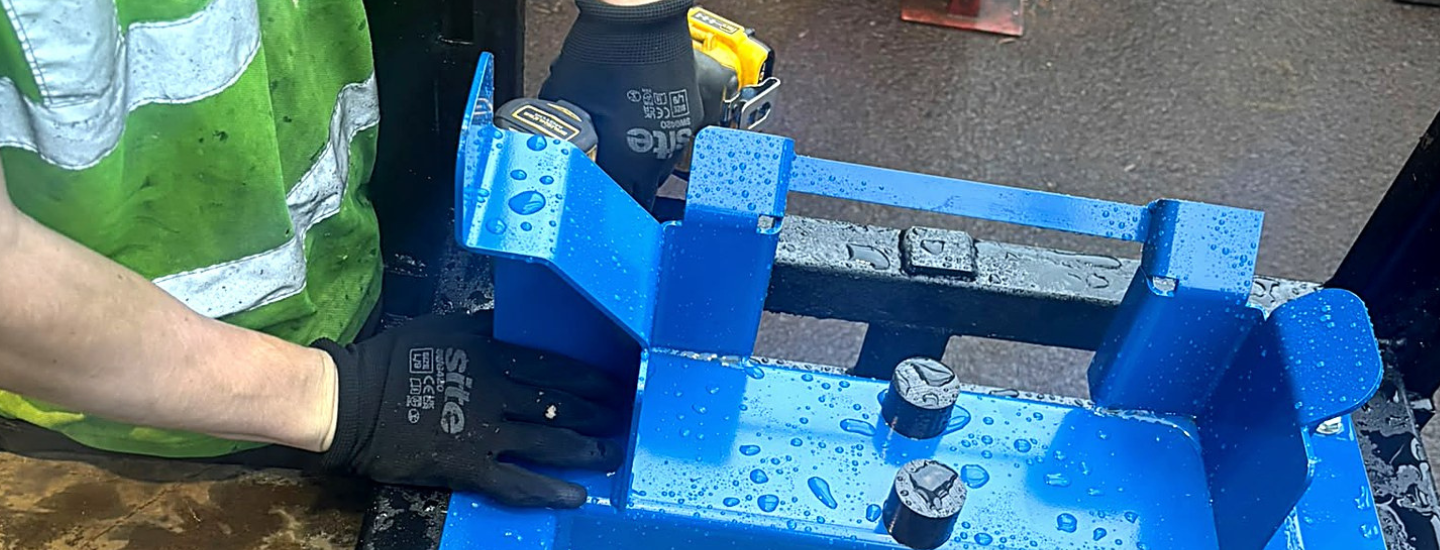
The frame outlives the insert, every time
A returnable steel stillage frame is a simple, heavy, welded box. It gets knocked about by fork trucks, it gets stacked, it goes on and off a wagon hundreds of times, and it takes it. Frames last years.
The insert does not. The insert is the part doing the actual work: the internal frames, formers and cradles that hold the part in a fixed position and stop it touching anything it should not touch. Every time a part goes in and comes out, the insert takes the load, the rub and the knock. That is where the wear is.
So when a fleet starts sending parts back marked, the frame is usually fine. It is the insert that has gone.
What actually goes wrong
Five things, in roughly the order we see them.
Bent formers. Somebody has dropped a part in from height, or loaded it at an angle, or the stillage has been shunted with the lid open. The former is now a few millimetres out and the part no longer sits where it should.
Worn contact faces. The faces the part rests against have worn down. The part sits lower, or further over, and it now touches something else in the stillage.
Broken welds. A cracked or failed weld at the base of a former, often from repeated impact rather than one big hit. It may still look right until it is loaded.
Missing or perished padding. The protective facing has come off, or hardened, or worn through to steel. Now you have steel on a machined face.
Cumulative drift. No single dramatic failure, just an insert that has slowly moved away from its original fixture position.
The end result is the same in every case: the part moves in transit and arrives at your customer marked. Then it is a rework, or a rejection, or a quality report you did not want to write.
Do not scrap a stillage because the insert is worn
We see this regularly. A fleet of returnable stillages starts causing damage, and the reaction is to buy new stillages. That means paying again for the heavy welded frame, which was not the problem, in order to get a new insert, which was.
Overhaul the insert and you keep the frame you already own. On a fleet of any size the difference is significant. Ask us to quote both ways and compare the two figures, because we would rather you saw the numbers than took our word for it.
What an overhaul involves
The insert comes back to Stafford and goes through the same sequence every time.
Strip. Insert out, padding and wear facings off, everything back to bare steel.
Inspect. What has bent, what has cracked, what has worn, and how far. Anything that has failed more than once gets flagged, because that is usually a design point rather than an accident.
Straighten. Formers pulled back true.
Re-weld. Failed and cracked welds cut out and re-run. We do not weld over a crack.
Replace wear faces. New contact faces and new padding to the original specification, or an improved one if the original is the reason it keeps failing.
Re-check to the original fixture. This is the part that matters. The insert is checked back against the original fixture, so it holds the part where the drawing says it should, not where the worn one had drifted to.
Finish. Protective treatment as specified, then back to you.
We do this in volume. Overhauling inserts across a manufacturer’s returnable stillage fleet, in batches, to a repeatable standard, is the single largest stream of work in our shop. If you run a fleet and your damage rate is creeping up, that is what this process is for.
Send us one worn insert and we will strip, inspect and quote it, and tell you what we found. Ring 01785 450113.